Micron+
Small Printer, Big Capability
The Story
After building MrMakeIt, my heavily modified Ender 5 Plus, I realized that a 350mm printer is not always the right tool for the job. Large printers are great for large parts, but they take longer to heat soak, have longer belts and more moving mass, and occupy a significant footprint. I wanted something smaller, quicker, and more practical for everyday printing. Something I could fire up for a quick bracket or prototype without waiting for a massive build plate to come to temperature.
The answer was the Micron+, a compact CoreXY printer from the Printers for Ants community. Designed by HartK, the Micron+ is fundamentally a scaled-down reimagination of the Voron 2.4. It inherits the Voron's proven flying-gantry architecture, quad-belt Z-drive system, and quad gantry leveling, but rebuilds it all around compact 1515 aluminum extrusions and a 180x180x165mm build volume. The result is a fully enclosed, high-performance printer that fits on a desk.
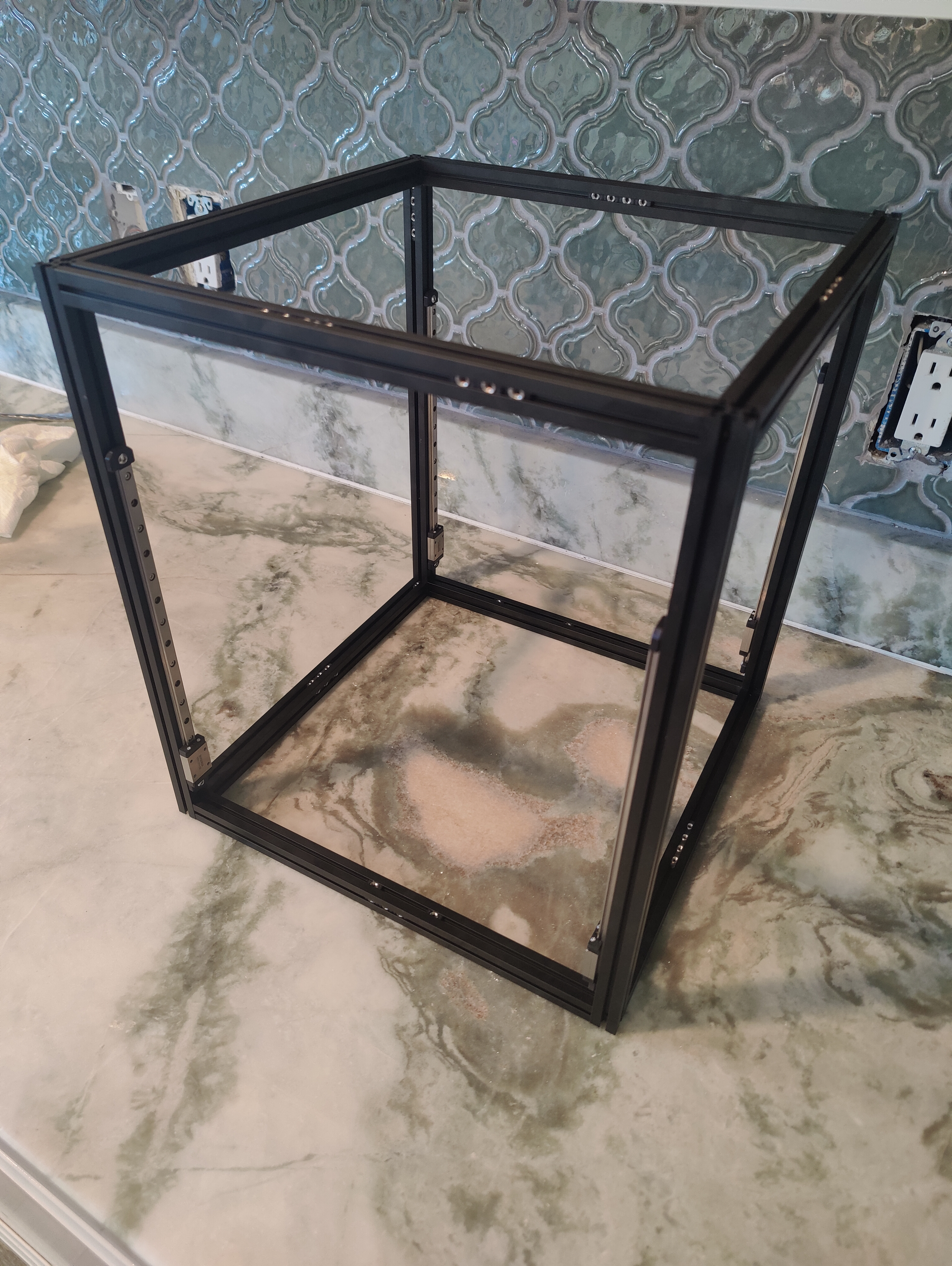
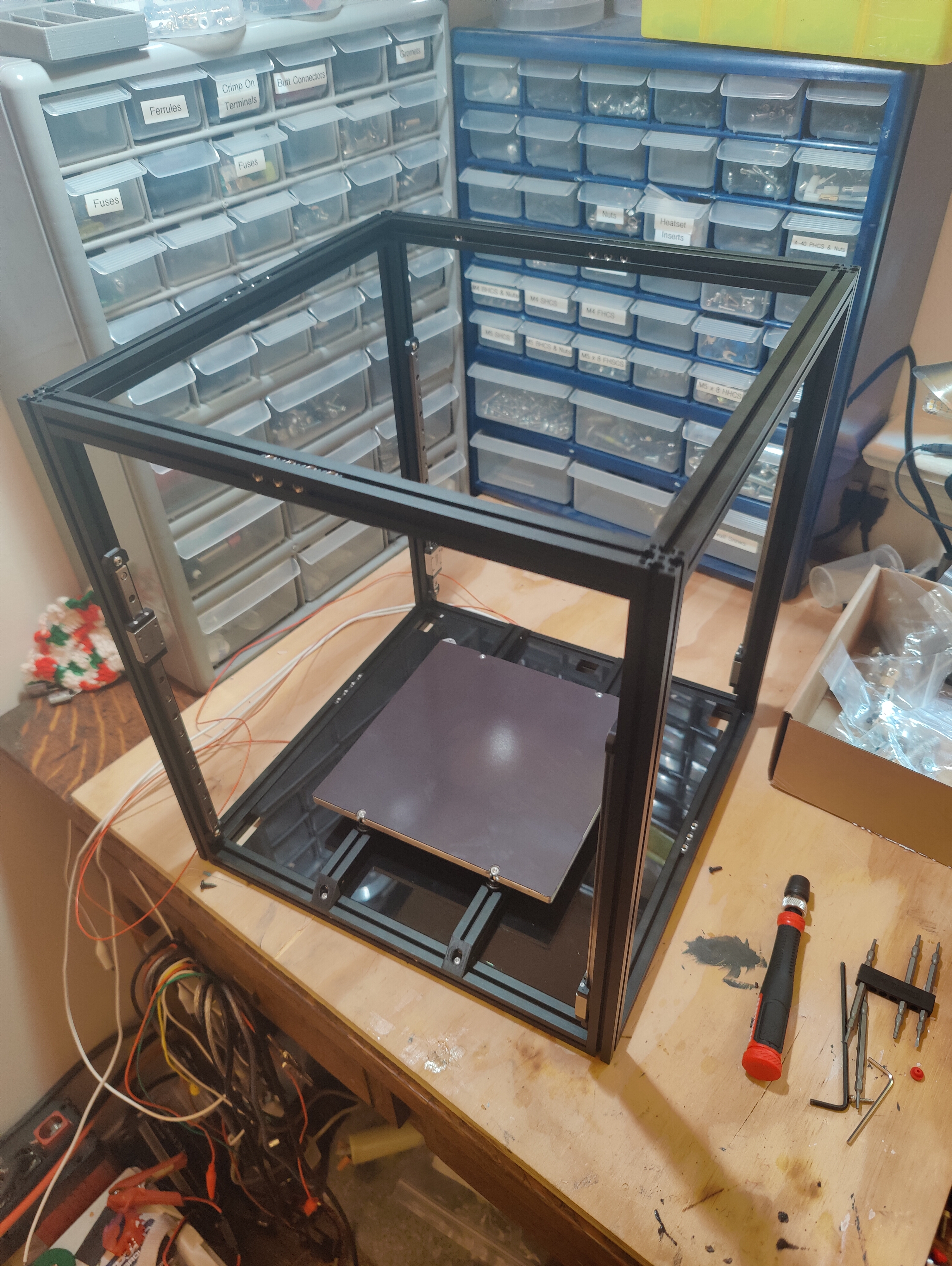
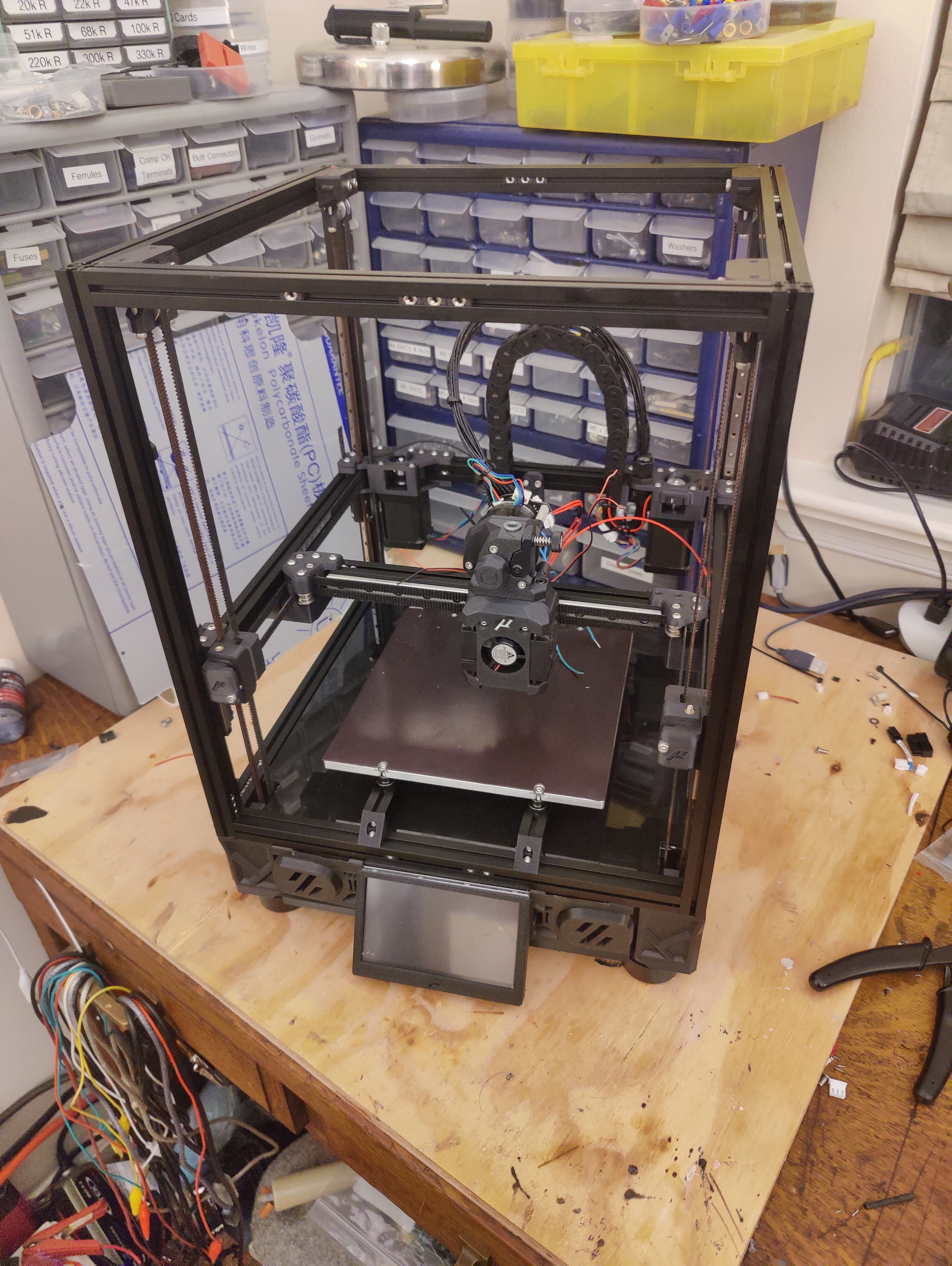
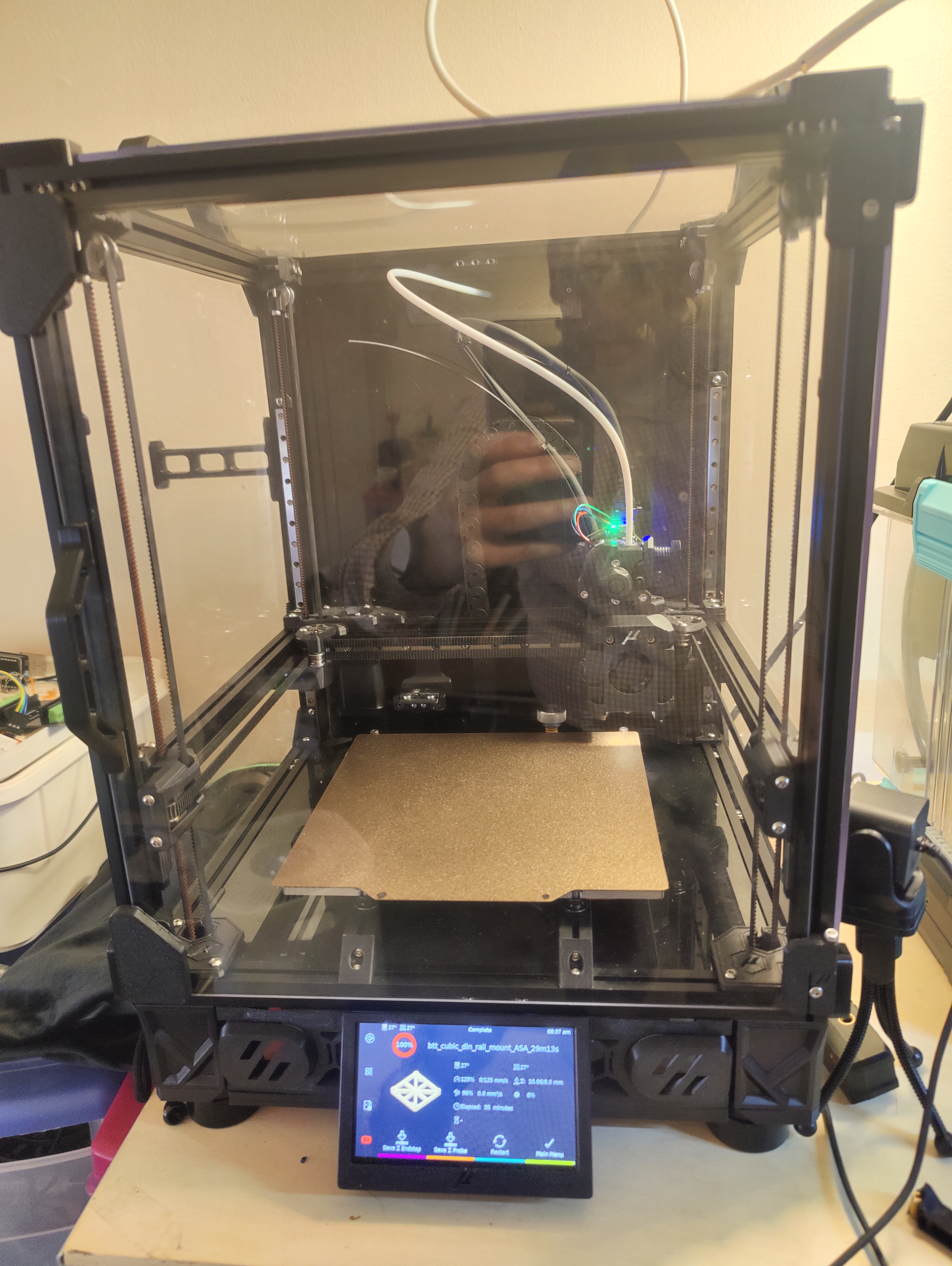
The Self-Source Build
Rather than buying a pre-packaged kit, I sourced this printer through the West3D Micron Plus 180 Self-Source Configurator. Unlike a standard kit where every component is predetermined, the West3D configurator lets you choose each major subsystem individually: controller board, extruder, hotend, motion components, bed heater, probe, and more. The configurator adjusts the price as you swap components, and the final package ships with everything needed to build the printer.
This approach sits between a true self-source (where you order hundreds of individual parts from dozens of vendors) and a fixed kit (where you get whatever the manufacturer decided). It gives you control over the components that matter most while still providing the convenience of a single shipment from a US-based vendor with support.
The Hardware
Controller: Leviathan
The Leviathan is a high-end controller board developed by JNP, Voron Design, and LDO Motors. It features an STM32F446 MCU with both TMC2209 drivers (for Z motors and extruder) and TMC5160 drivers (for the A/B CoreXY motors) integrated on a single board. It includes Raspberry Pi mounting holes, and a comprehensive set of fan and thermistor ports make it a serious all-in-one solution.
Extruder: Galileo 2
The Galileo 2 (G2E) by JaredC01 is a planetary-gear extruder with a 9:1 gear ratio. The custom 9-tooth stepper design allows perfectly even loading across all three planet gears (9 divides evenly by 3), which eliminates the uneven wear that plagued earlier planetary extruder designs. A large 16mm drive gear paired with an idler bearing helps prevent vertical fine artifacts. It delivers serious grip force in a compact package.
Toolhead: Dragonburner
The Dragonburner by chirpy2605 is a lightweight toolhead designed for the Voron V0 and Printers for Ants ecosystem. It uses dual 4010 blower fans for part cooling, significantly outperforming the stock Mini-Stealthburner. It supports Neopixel LEDs, has a built-in accelerometer mount for input shaper tuning, and is compatible with a wide range of hotends and extruders.
Hot End: Rapido PT1000 UHF
The Phaetus Rapido UHF (Ultra High Flow) features an extended copper alloy melt zone that pushes volumetric flow rates up to around 75mm³/s. The PT1000 thermistor provides accurate temperature readings across the full range to 350°C, which matters when printing high-temperature materials like polycarbonate and nylon. A thin-walled titanium heat break keeps the transition zone sharp.
Probe: Klicky
The Klicky Probe by JosAr is a magnetically-attached mechanical bed probe. It docks on the printer's gantry and uses magnets for both physical attachment and electrical connection. Klipper macros automate the attach-probe-dock cycle, so the probe is only mounted during leveling operations and does not add weight or collision risk during printing.
Z-Drive: Galileo 2 Z (G2Z)
The Z-drive uses four G2Z modules, the Z-drive variant of the Galileo 2 planetary gearbox. Each provides a 9:1 gear ratio (up from the stock Voron 2's 5:1 belt-driven reduction), delivering finer Z resolution and eliminating the need for Z-drive belt loops and tensioning hardware. On the Micron+ where electronics bay space is tight, the compact G2Z modules free up significant room.
Bed: MIC6 Plate with Edge-to-Edge Heater
The build surface is a precision-machined MIC6 cast aluminum plate, known for its excellent flatness tolerance. Underneath sits a 320W edge-to-edge silicone heater with an integrated thermal safety switch. Unlike undersized heaters that leave cold spots at the edges, this full-coverage heater provides uniform temperature distribution across the entire print surface, which is critical for consistent adhesion when printing ABS and ASA in the enclosed chamber.
Motion: Gates and Berserker
The motion system uses Gates pulleys, idlers, and EPDM belts for reliable, low-stretch power transmission. All linear bearings are Berserker ABEC 9 rated for smooth, precise motion on the MGN linear rails.
Safety: Panasonic SSR
A Panasonic AQA211VL 15A solid-state relay controls the AC bed heater. The Panasonic SSR was chosen for its reliability and quality over cheaper alternatives, an important consideration given that the SSR controls mains voltage to a high-wattage heating element.
Why Small?
The 180mm build volume might seem limiting compared to MrMakeIt's 350mm platform, but for the vast majority of prints it is more than sufficient. The Micron+ heats up faster, uses less energy, can achieve much higher accelerations without compromising print quality, and fits on a desk. The enclosed chamber still reaches the temperatures needed for engineering materials. When I need to print something large, MrMakeIt is there. For everything else, the Micron+ is the printer I reach for first.